The Art of Facilitation
Engaging Every Voice. Building Collective Capacity.
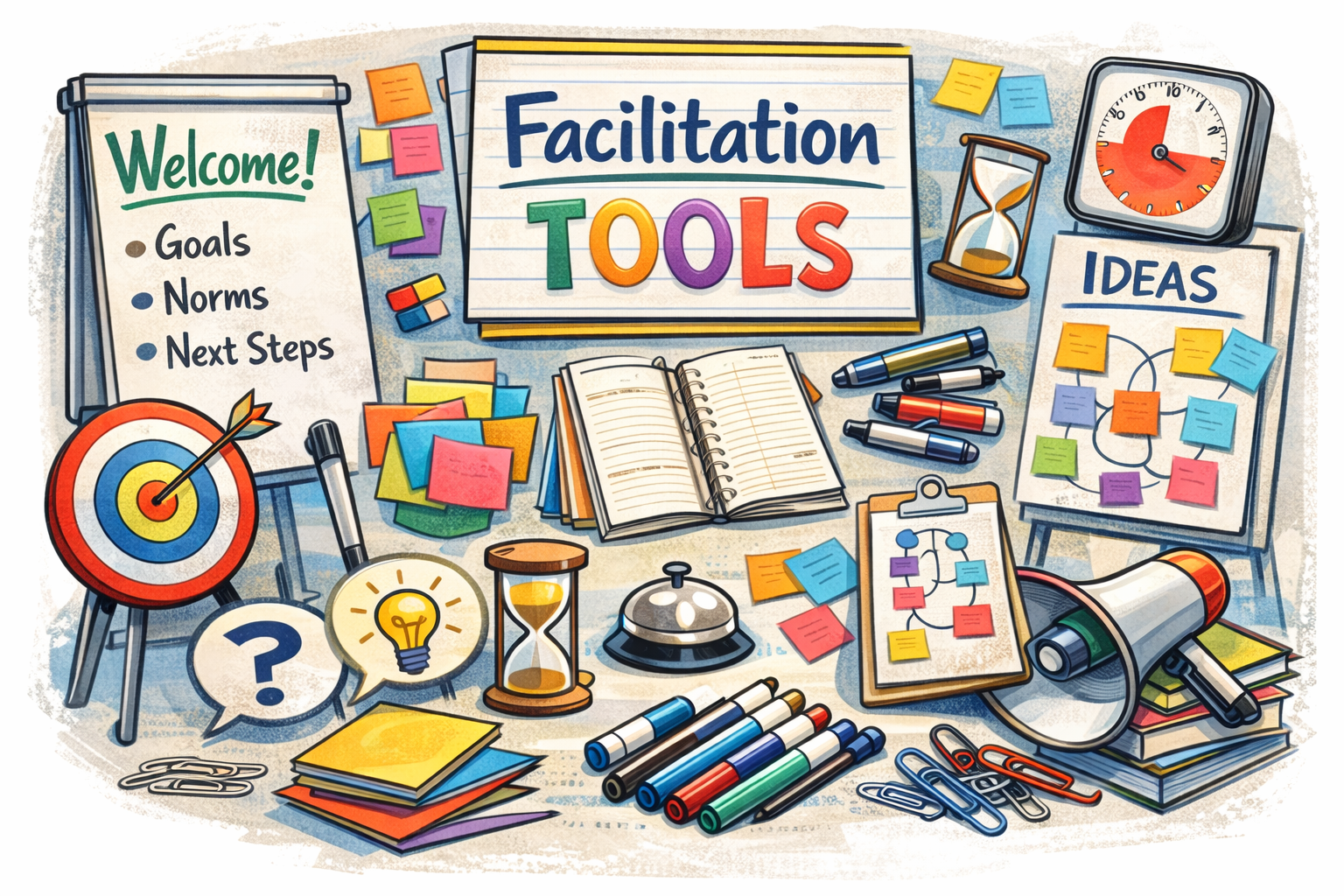
Facilitation is often misunderstood.
Some believe it is about managing a meeting. Others think it is about being the most knowledgeable person in the room. And still others assume it is simply about keeping things on time and on task.
But true facilitation is an ART. At its core, facilitation is a leadership stance.
It is the disciplined practice of designing and guiding learning experiences that engage every voice, surface collective wisdom, and move a group toward meaningful action.
Facilitation Is Not About Control
The art of facilitation requires resisting the urge to dominate the space. The facilitator is not the star of the show. Instead, they are the architect of the experience.
They design structures that:
Promote equity of voice
Encourage deep thinking
Surface multiple perspectives
Clarify purpose and outcomes
A skilled facilitator understands that how adults learn matters. Adults bring expertise, lived experience, and professional judgment into every room. Facilitation honors that knowledge rather than replacing it.
The Shift from Telling to Guiding
Many leaders were trained to present information. Fewer were trained to facilitate learning. Presenting transfers content. Facilitating builds capacity.
When leaders facilitate effectively, they shift from:
Providing answers → Asking powerful questions
Solving problems alone → Structuring collaborative problem-solving
Delivering information → Designing experiences
This shift is subtle but transformative. It moves a group from passive consumption to active construction of meaning.
The Discipline Beneath the Art
Great facilitation feels natural. But it is anything but accidental.
It requires intentional planning:
Clarifying outcomes before designing activities
Selecting structures that align with purpose
Anticipating resistance and confusion
Monitoring group energy and engagement
Facilitation also demands emotional intelligence. The facilitator reads the room. They notice who is speaking and who is silent. They sense tension before it escalates. They adjust in real time without abandoning the objective.
This is the art: structure and responsiveness in balance.
Engaging Every Voice
Engagement is not the same as participation.
True engagement occurs when individuals feel psychologically safe enough to contribute authentically. Facilitators cultivate this by establishing norms, modeling curiosity, and using structured protocols that ensure balanced dialogue.
When every voice is invited, valued, and heard, the quality of thinking improves. Collective efficacy grows. Decisions become more informed and more sustainable.
Facilitation as Capacity Building
In schools and organizations, facilitation is not an isolated skill. It is a lever for systemic improvement.
When leaders build facilitation capacity:
Teams collaborate more effectively
Meetings become purposeful rather than performative
Professional learning becomes active and meaningful
Collective responsibility increases
Facilitation shifts a culture from compliance to commitment. It transforms meetings from something people endure to something that advances the work.
The Art of Facilitation
The art of facilitation is not about perfection. It is about practice.
It requires reflection, feedback, and refinement. It demands intentional growth from foundational strategies to more advanced applications. And it calls leaders to see themselves not as deliverers of content, but as cultivators of collective intelligence.
When done well, facilitation does more than guide a conversation.
It shapes culture. It builds trust. It strengthens systems.
And ultimately, it ensures that every voice contributes to meaningful progress.